
Ted’s Existential Adventure
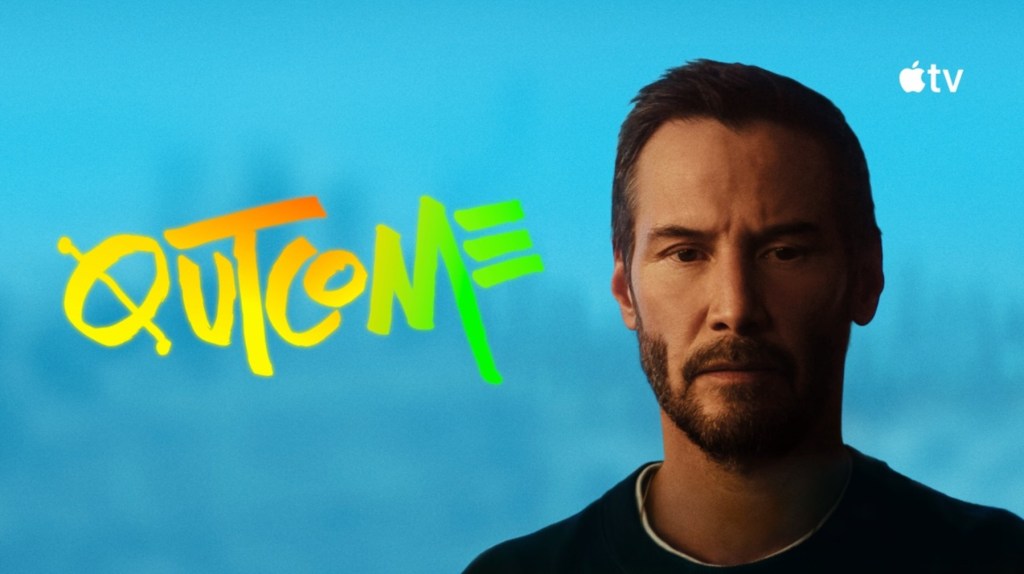
I didn’t expect to enjoy Outcome, the new comedy Directed by Jonah Hill and co-written by Hill and Ezra Woods. It’s a shaky film about a beloved movie star attempting to keep his image clean while dealing with blackmail and a rocky past the public doesn’t know about. It’s a dodgy premise that you would assume would deconstruct the modern Hollywood scandal and have something to say about so called “cancel culture.” You would assume that, and you’d be wrong. It’s a simple character study of a confused man that begins with clunky dialogue and a very uneven tone. Characters speak in complete exposition telling each other their relationships and histories and backstory. Things move quickly but very little happens in the way of coherent plot. However, after deciding to get into the groove and meet Outcome where it lives, I had a pretty good time!
First world Problems
I think there is an inherent strangeness when making a movie about the problems of rich and famous people. These stories tend fall into two groups. There’s the group of tortured, twisted artists. Great men with fatal flaws attempting to be good and trying to maintain their grasp on humanity while surrounded by the trappings of fame. And then there’s the satires, mocking their issues and revealing the ego and human frailty and jealousy and desire under the surface. Both approaches tend to leave me cold. Their humor comes off as grating self-flagellation if written by one of those rich and/or famous writers, or as jealous wishful thinking if written by an aspiring up and comer. Occasionally a story is told that strikes the right balance and finds gold in those hills, like The Studio from Seth Rogen and Evan Goldberg which found the perfect level of satire and pathos to get me to invest emotionally in a group of consistently overwhelmed studio executives, of all people, trying to make movies in LA.
When I heard that Jonah Hill, of all people, had written and directed a movie about a movie star played by Keanu Reeves I was… Concerned, let’s say. I love Keanu Reeves; most people do, but is this really the story he needs to be telling? In a word, no. This is not a story anyone needs to be telling. Outcome has very little vital to say about our world; instead, it focuses on one man’s journey to accept his flaws and overcome them. When taken on its terms, it’s a pretty interesting one of those.
Reeves is natural and in his element as Reef Hawk, an actor since childhood who like Reeves is considered an uncomplicated icon with little in the way of controversy and negative buzz. One day Reef is blindsided when his lawyer Ira informs him that he is being blackmailed over a mysterious video that show’s Reef doing something that would hurt his public image. Ira then tells him to go on a sort of apology tour of those he’s wronged and try to see if any of them are behind the extortion. It’s a decent premise for a Hollywood pressure cooker and a good excuse to have Reeves play opposite a slew of interesting people in intimate scenes. The problem is that little in the way of pressure is ever actually placed on Reef; there’s the impression of danger, but most of that is played as exaggeration by Hill’s wacky, over the top Ira whose wild swings between confident bloviation and alarmist concern are one of the first problems with the film. When Hill steps on stage in a fake looking beard and playing 10 to 20 years older than he actually is, it comes off as so farcical as to wipe any sense of drama or stakes clean off the stage.
Halfway through Hill’s first scene he exclaims that he needs to use the toilet; he talks about the past and indicates that weekend at burnie’s is based on something that happened to him, Mel Gibson, and Stephen Hawking. The movie seems to forget if it is a cartoon or a serious character study and it flips back and forth between the two again and again.
The little things
It’s in the quieter moments that Outcome starts to click. Reef goes from person to person apologizing for vague past transgressions. It’s in these scenes that both Reeves and the other actors get to have conversations that feel earnest and interesting. There’s one with Reef’s mother (Susan Lucci) who is a Real Housewives reality star that only agrees to talk with her son if it can be on camera for her show. Reef is disturbed by his mother’s seeming addiction to the spotlight, but the film never fully condemns her and writes her from a place of reason and understanding. In another film, I could imagine this relationship being played as a horrid stage mother and her exasperated son trying to break through, but Hill and Woods show surprising restraint and let Lucci’s character give her reasons and worldview without too much judgement from the script. There are several long conversations in Outcome, and each one feels like a it sheds new light on the main character and his situation while giving brief sparks of real characterization to the other person in the scene. There’s one particularly moving scene where, after blowing up at one of his best friends (Cameron Diaz), Reef asks his other best friend Xander (played on a tightrope between annoying and endearing by Matt Bomer) why he still chooses to be friends with him. Xander’s response is interesting, emotional, and gives real weight and pathos to the movie by showing that under the Hollywood weirdness we’ve seen, these are people who are just trying to live their lives.
The film’s desire to create empathy and give it’s characters grace is what helps set it apart from say, a Ryan Murphy show that tend to take pleasure in making it’s characters into punchlines and sociopaths. However, it’s that empathy that also adds some murky water to the movie’s overall worldview when put in context with our actual reality. It might be funny to see a room full of crisis consultants brainstorm on how to save our protagonist in outlandish ways with bizarre showbiz logic but having a large black and white portrait of Kanye West on the wall behind them makes it feel a little too close to home. Same for a picture of Kevin Spacey hanging in Ira’s office in the background of another shot. It draws uncomfortable questions about how the film feels about these men; Is it trying to see the world from their point of view? To give them humanity? If so, why have Reef be such a good person? The movie does NOT do good enough of a job justifying or clarifying its stance. It doesn’t go out of its way to explain why and how Reef is different and does not belong in the same breath as these other men. Especially when we actually see the video everyone is so worried about. Turns out that It’s not that bad in the grand scheme of things. Without pointing out that Reef is different from these other men it makes it seem like we’re supposed to draw a comparison between Reef’s mild infractions and the horrific deeds of the others. Are we to think that this is what they’re going through? If so, ew!
It’s hard to know what Hill and Woods are trying to say with this movie, or if they have anything to say at all. In its highest moments Outcome feels like a wry, introspective character piece. A broad and comic look into the subtle things that make us human. In its worst moments, it’s a confused, somewhat offensive satire of Hollywood that fails to make a mark in either direction.
Conclusion
Taken as a metaphor or allegory for anything in the real world, Outcome falls flat on its face. But if look at the nuance of its characters and the unconventional plot structure, there’s something here worth experiencing. As a movie I did really enjoy my time, but I can’t say this is the outcome I was hoping for. (Wordplay!)

Leave a comment